

FinCEN sees stimulus payment fraud schemes rising
The Treasury Department’s Financial Crimes Enforcement Network issued an advisory Wednesday warning about a growing variety of scams involving Economic Impact Payments aimed at recipients of COVID-19 relief.
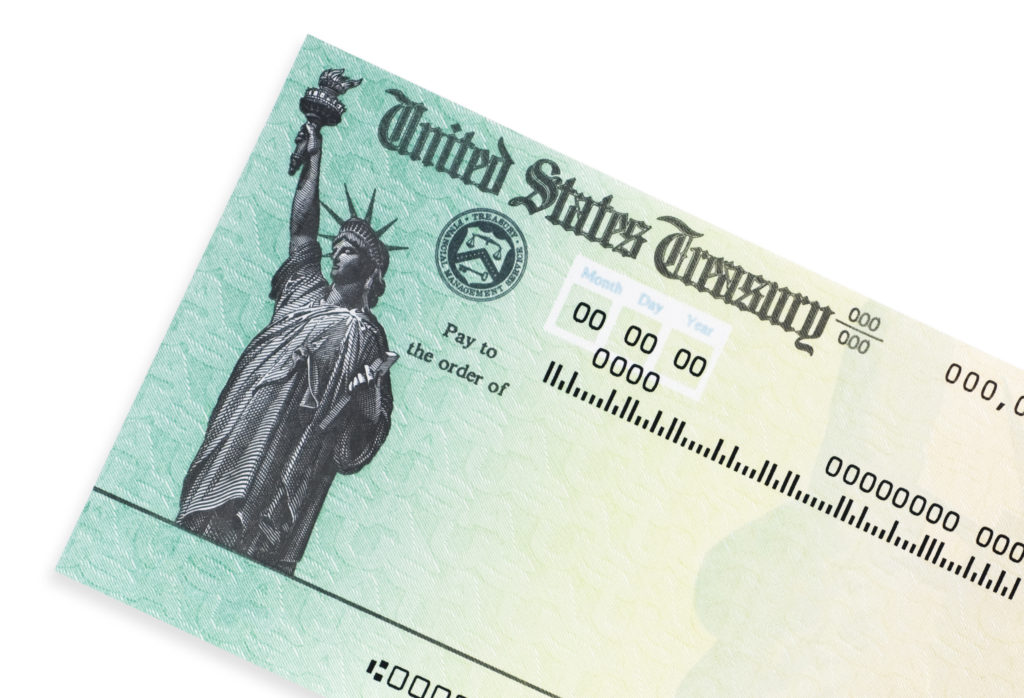
In one such scheme, fraudsters are sending potential victims bogus checks, instructing the recipients to call a phone number or verify information online so they can cash the fraudulent checks. Victims are asked for their personal or bank account information under the ruse that the information is needed to receive or speed up their stimulus payment. The scammers then use the information they’ve obtained to commit various crimes, including identity theft and the unauthorized access of bank accounts. In another scheme, the fraudsters deposit altered EIP checks, often through an ATM or a mobile device. The altered checks may modify the name of the payee, or leave the name on the check blank, and the amount may be changed prior to deposit. In some cases, the checks are chemically altered so the original payee name is removed. The advisory was based on FinCEN’s analysis of COVID-19-related information it got from Bank Secrecy Act data, public reporting and its law enforcement partners.
The schemes come at a time when criminals are finding ways to exploit the various forms of COVID relief distributed by the Treasury, the Internal Revenue Service, the Small Business Administration, and state unemployment departments. In the rush to distribute relief quickly last year and this year to stem the economic crisis from the pandemic, few safeguards were initially in place to prevent criminals from siphoning off money from the billions of dollars in relief provided under the CARES Act and other laws passed by Congress.

Jesus Jauregui/ImagePixel – Fotolia
Some of the schemes involve counterfeit checks. “Fraudsters deposit counterfeit EIP checks, often via ATM or mobile device,” said the FinCEN advisory. “Fraudsters have various methods to create a counterfeit check, including checks reproduced from digital images of checks issued by the U.S. Department of the Treasury. However, such counterfeit checks will often have irregularities involving the check number, paper, coloring, and/or font.”
Some criminals are outright stealing the Economic Impact Payments from intended recipients, exploiting the overburdened U.S. Postal Service, which has faced unprecedented challenges during the pandemic delivering the mail as more Americans turned to e-commerce sites to buy goods and supplies to protect themselves from possible exposure to the virus at brick-and-mortar stores, even as Postmaster General Louis DeJoy rearranged postal schedules, removed mailboxes, and dismantled mail-processing equipment to save money.
Some of the thefts reported by FinCEN can include individuals stealing a stimulus payment from the mail; requesting an EIP disbursal for an ineligible person, seeking someone else’s EIP without the payee’s knowledge or approval, or through “coercive means,” or using stolen personal information, including giving false bank account information to the IRS to claim another person’s payment.
The IRS has issued several warnings about phishing scams involving the EIP, and FinCEN echoed some of those examples in its advisory. It is seeing fraudsters employing phishing schemes using emails, letters, phone calls and text messages containing keywords such as “Corona Virus,” “COVID-19,” and “Stimulus,” with the aim of obtaining personally identifiable information and financial account information, such as account numbers and passwords.
FinCEN is also seeing cases of inappropriate seizure of the payments. “A private company that may have control over a person’s finances or serves as his or her representative payee seizes a person’s EIP, for wage garnishments or debt collection, and does not return the inappropriately seized payments,” said the advisory.
FinCEN provided some red flags that banks and other financial institutions can use to spot signs of fraudulent activity related to the EIP, including an account holder who attempts to deposit one or more checks that appear to be issued by the U.S. Treasury, but turn out to be counterfeits. When questioned, the customer may claim they were sent a partial payment, and needed to verify their personal or financial information before receiving the full EIP. Alternatively, they may say they received the check from a current or former employer with instructions that the check was the customer’s “stimulus payment” and they have to buy prepaid cards and send them to another person.