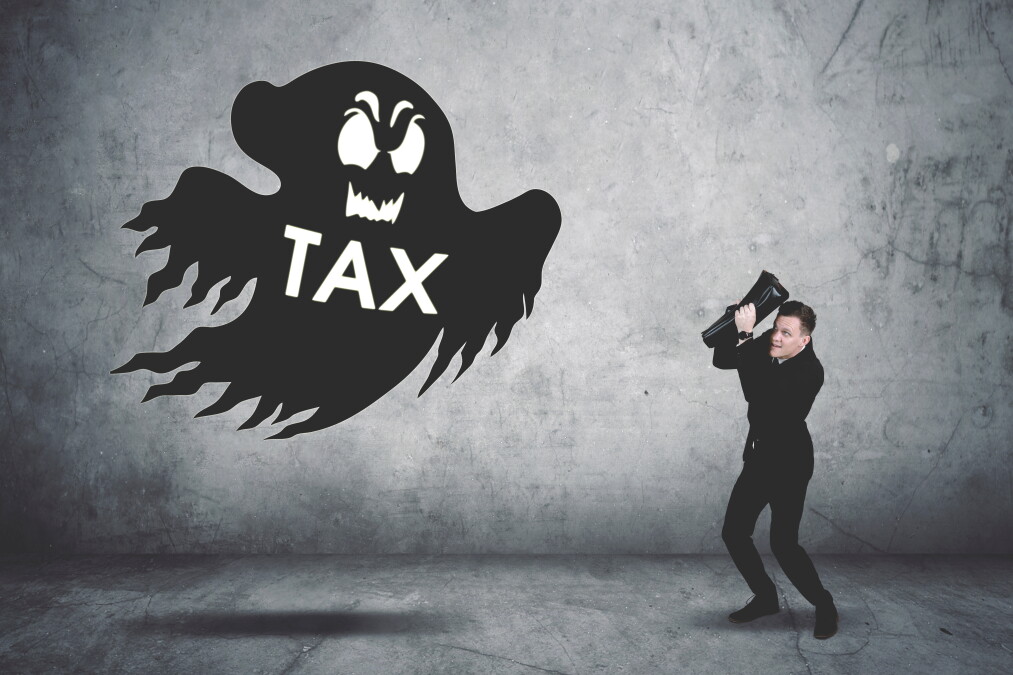

IRS urged to crack down on ‘ghost preparers’


- Key insight: Find out how scattered database systems affect the IRS’s ability to track ghost preparers.
- What’s at stake: Taxpayers who face stolen refunds and fraud liability while rogue preparers disappear.
- Supporting data: Six different IRS offices are currently tasked with addressing ghost preparer risks.
The Internal Revenue Service needs to do more to identify and take action to protect taxpayers from so-called “ghost preparers” who don’t sign their clients’ returns and expose them to tax fraud, according to a new government report.
Processing Content
The report, released Friday by the Government Accountability Office, explained how tax filing can become a scary experience for taxpayers victimized by a ghost preparer. These rogue preparers can steal clients’ tax refunds or personal information, which can then be used to cause financial and other problems beyond the tax return itself. Like their namesakes, ghost preparers often disappear into thin air, leaving taxpayers responsible for the false information on their income tax returns. A good tax preparer should be willing to stand behind their work, the GAO noted, but a ghost preparer will not.
Ghost preparers, by definition, are difficult to find. The GAO reported on what the IRS can do when it suspects a ghost preparer was used, and the various actions IRS will take against identified ghost preparers, ranging from monetary penalties to more serious enforcement actions, such as opening a criminal investigation. But the report found there’s still more the IRS can do to protect taxpayers from harms such as fraudulent returns and stolen tax refunds
“Ghost preparers are paid tax preparers who hide their identities on returns and avoid accountability for making errors, committing fraud or stealing refunds,” said the report. “But ghost preparers are hard for [the] IRS to identify — leaving taxpayers responsible for errors or fraud. The IRS has started addressing this problem, but its efforts are fragmented. For example, relevant data is scattered across several databases. This makes it hard for [the] IRS to use this information to better understand ghost preparer behavior and protect taxpayers.”
The IRS lacks a strategy, goals or ways to measure the success of its efforts, the report found.
Ghost preparers are paid tax preparers who don’t comply with the requirements to identify themselves on the tax returns they produce for others. They may intentionally leave identifying information off the return to get away with filing fraudulent income tax returns, stealing taxpayers’ refunds and identities. Courts have ordered individual ghost preparers to pay millions of dollars in restitution to the government, but according to IRS officials, the total effect of ghost preparers is likely to be larger, in part because ghost preparers are so difficult to detect.
The IRS maintains some data on the ghost preparers it has identified, but the systems used by the IRS to track ghost preparer cases and the outcomes aren’t connected with each other and have limitations that reduce their usefulness. As a result, the IRS doesn’t know how many ghost preparers it has identified, investigated and addressed. A better understanding of the existing data, including its limitations, would help the IRS direct its enforcement resources and protect taxpayers from fraudulent returns and stolen refunds.
The IRS identifies and addresses ghost preparers through data analysis, referrals, taxpayer education and enforcement actions such as investigations, the report noted. But these efforts are fragmented across six different offices, and the IRS is missing opportunities to share information and address risks better. A comprehensive, coordinated preparer strategy, including efforts addressing ghost preparers, could help the IRS better align its resources with risks and identify additional needs. The GAO noted that paid preparers handled over half of all tax returns in fiscal year 2025 and have an enormous effect on the IRS’s ability to administer tax laws effectively.
The IRS has not developed measurable objectives or performance goals either. Defining those objectives, goals and performance measures could help the IRS reliably assess whether its efforts are reducing ghost preparer activity and adjust its strategy and allocate resources more effectively.
The GAO made three recommendations in the report, including that the IRS identify opportunities to enhance data collecting, sharing and analysis to inform its ghost preparer efforts, incorporate ghost preparer efforts within a comprehensive, coordinated paid preparer strategy, and define measurable objectives and goals. The IRS agreed with the GAO’s recommendations and described the steps it plans to take or started taking, in response to each recommendation.
“We agree that continuing to advance our efforts will improve our ability to identify and hold accountable ghost preparers,” wrote IRS CEO Frank Bisignano in response to the report. “The IRS will continue its efforts with the Servicewide Return Preparer Strategy to enhance enterprise data integration, governance, risk-based treatment selection, performance measurement, and cross-functional coordination while preserving operating division responsibilities.”
TAS Act penalties
At the end of September, the Senate passed the bipartisan Taxpayer Service and Assistance Act, a wide-ranging package of IRS administrative reforms containing over 60 provisions, including some that would deter ghost preparers. The bill is now in the hands of the House Ways and Means Committee, which may make further changes or pass it to the House for consideration during the lame-duck session after the midterm elections. Tax professional organizations including the National Association of Enrolled Agents are pushing for passage before the end of the congressional term.
The bill would replace the previous $65-per-failure penalty with a $250 penalty per failure (raising the annual maximum from $33,000 to $75,000) for any paid preparer who fails to provide a valid Preparer Tax Identification Number on a return or claim for refund The $250 penalty would apply if the PTIN belongs to another person, does not exist, is inactive, expired, withdrawn, suspended or revoked. The bill would also create a criminal penalty for any paid preparer who willfully fails to furnish a valid PTIN or willfully provides an invalid PTIN with intent to evade statutory requirements. Violators would face a felony conviction punishable by up to three years in prison and fines of up to $50,000, or $100,000 for corporations.